Key Points
- Establish Full Asset Visibility: Centralize IT asset management and software license management to identify waste, duplication, and compliance gaps.
- Optimize Infrastructure Continuously: Apply IT infrastructure cost optimization across cloud, endpoints, and on-prem systems using usage and performance data.
- Govern Resource Allocation: Use FinOps and executive oversight to guide IT resource allocation and prevent cost drift.
- Prioritize Data-Driven Decisions: Benchmark spend, measure ROI holistically, and validate optimization efforts with real usage metrics.
- Align Leadership and Operations: Successful IT cost optimization strategies require executive sponsorship, automation, and repeatable governance processes.
Organizations face mounting pressure to maximize technology returns while minimizing expenses. Smart IT cost optimization focuses on eliminating unnecessary spending without compromising performance, allowing technology departments to redirect resources toward initiatives that generate competitive advantages and measurable business outcomes.
In 2026, IT cost optimization strategies increasingly depend on mature IT asset management practices, accurate software license management, and data-driven IT resource allocation across hybrid, cloud, and endpoint environments.
Boost IT performance while cutting operational costs with NinjaOne’s endpoint management solution.
Strategic IT investment management
IT cost optimization represents a methodical approach to reducing expenses while maintaining or improving IT service capabilities. Unlike simple cost-cutting, optimization focuses on intentional IT resource allocation aligned with business outcomes, risk tolerance, and long-term scalability across your technology ecosystem. When properly implemented, these strategies help organizations eliminate waste without sacrificing performance or innovation.
What is IT cost optimization?
With global IT spending reaching USD 5.74 trillion in 2025 and continuing to grow into 2026, CIOs and CFOs face growing pressure to deliver high-performance systems while managing expenses effectively.
IT cost optimization is the continuous process of managing technology expenses while maximizing business value from IT investments. This practice goes beyond simple budget cuts by implementing structured methodologies to identify inefficiencies, eliminate redundancies, and align technology spending with business objectives. In 2026, this also includes tighter financial governance, audit readiness, and defensible reporting for executive and regulatory stakeholders.
The most successful cost optimization initiatives combine short-term tactical measures with long-term strategic changes. For example, you might consolidate underutilized servers while simultaneously developing a multi-year cloud migration strategy.
Learn more about effective network monitoring by checking out the NinjaOne RMM FAQ.
How to reduce IT overhead?
Reducing IT overhead requires a systematic approach to identifying and eliminating unnecessary expenses across your technology environment.
Start by conducting a comprehensive IT asset management and spend audit across hardware, cloud services, and software licenses, categorizing expenses by type, department, and business function. This visibility allows you to identify immediate opportunities for consolidation and waste reduction.
Next, examine your operational processes for inefficiencies that drive up costs. Many organizations discover significant savings by automating routine maintenance tasks, standardizing hardware configurations, and implementing self-service options for common user requests.
Consider these proven overhead reduction techniques:
- Unify monitoring tools to reduce duplication and simplify visibility.
- Standardize hardware to streamline support and lower maintenance.
- Automate patching to save time and boost security.
- Enable self-service password resets to reduce helpdesk load.
- Centralize purchasing to unlock volume discounts and control spend
Infrastructure optimization techniques
IT infrastructure cost optimization typically represents one of the largest opportunities for savings across on-prem, cloud, and endpoint environments, making it a prime target for optimization efforts Effective infrastructure optimization balances immediate cost savings with long-term operational efficiency, focusing on both technical configurations and management processes.
Rightsize cloud resources
Cloud resources often become overprovisioned as teams select larger instances than necessary or fail to adjust resources as application needs change. Implementing a systematic approach to rightsizing can reduce your cloud spend without impacting performance. Start by establishing a complete inventory of your cloud resources, including usage patterns, performance metrics, and cost data.
Analyzing this data reveals immediate opportunities for rightsizing. Look for instances with consistently low CPU utilization (below 20%), excessive storage allocations, or development environments running during non-working hours.
Smart license management
Software licensing can represent a quarter of IT budgets, yet many organizations lack visibility into their license utilization.
Implementing smart software license management practices can reduce these costs significantly while maintaining compliance. Begin by creating a comprehensive inventory of all software assets, including license terms, renewal dates and actual usage patterns. Software license management must be tightly integrated with IT asset management systems to support audits, renewals, and vendor negotiations.
This inventory reveals immediate savings opportunities through the elimination of unused licenses, the consolidation of similar tools, and the renegotiation of unfavorable contract terms. Many organizations discover they’re paying for significantly more licenses than they actually use, particularly for specialized software or after organizational changes.
Data-driven cost evaluation approaches
Making effective cost optimization decisions requires accurate, comprehensive data about your technology environment. Data-driven approaches eliminate guesswork and allow you to prioritize initiatives based on potential impact rather than assumptions.
ROI measurement frameworks
Traditional ROI models often focus narrowly on cost savings, missing the broader value of technology investments. In reality, true ROI includes both measurable outcomes, like productivity gains and time-to-value, and strategic benefits such as risk reduction, scalability, and user satisfaction.
An effective framework defines costs and benefits clearly, uses consistent timeframes and evaluates both financial and non-financial impacts. It should also include post-implementation reviews to validate assumptions and refine future decisions.
When done right, ROI isn’t just about proving value—it’s about uncovering it, guiding smarter investments, and aligning IT with long-term business growth.
Benchmark spending patterns
Benchmarking IT spend helps uncover whether your investments align with business priorities, operational needs and industry norms. Rather than simply comparing totals, effective benchmarking reveals why your spending differs—whether due to regulatory demands, geographic cost variations or gaps in process maturity.
The goal is to validate high-impact investments, flag potential inefficiencies, and provide data-driven justification for deviations from industry patterns. Used strategically, benchmarking becomes a decision-making tool, not just a cost check.
Cost optimization best practices for IT leaders
Successful IT cost optimization requires executive leadership and organizational discipline. IT leaders must balance short-term savings opportunities with long-term strategic objectives, maintaining essential capabilities while reducing unnecessary expenses.
Extend technology lifecycles
Thoughtfully extending hardware and software lifecycles is a great cost optimization best practice. This can significantly reduce capital expenses without compromising performance or reliability. When extending lifecycles, focus first on stable, low-risk systems where performance requirements change slowly. For example, network infrastructure, storage systems, and standard productivity devices often function effectively well beyond typical replacement cycles.
Components to include in your lifecycle extension strategy:
- Regular assessment of asset condition and performance.
- Proactive maintenance to prevent failures and extend lifecycle.
- Risk-based prioritization of replacement decisions.
- Selective component upgrades instead of complete replacements.
- Contingency plans for managing potential failures.
Streamline service delivery
Inefficient service delivery processes drive up IT costs through excessive manual effort, inconsistent outcomes, and prolonged resolution times. Once you’ve identified process inefficiencies, redesign workflows to eliminate unnecessary complexity. Automation plays a key role here, handling routine tasks and ensuring consistent execution of standard processes.
Follow these steps for immediate improvement:
- Create a standardized service catalog with clear definitions and SLAs.
- Implement workflow automation for routine request fulfillment.
- Develop knowledge management resources for common issues.
- Establish self-service portals for password resets and software requests.
- Use chatbots to handle Tier 1 support inquiries.
Reduce IT costs by adopting a unified endpoint management system.
→ Start a free trial or watch a demo of NinjaOne endpoint management
Practical financial governance methods
Effective financial governance provides the foundation for sustainable IT cost optimization. Without structured oversight processes, initial savings often erode as departments revert to previous spending patterns. Governance ensures accountability, enforces policy adherence and enables ongoing evaluation of technology spend against evolving business goals—preventing financial drift over time.
Implement FinOps principles
FinOps principles provide a structured approach to managing cloud, infrastructure, and software spending through shared accountability and data-driven decisions. Unlike traditional IT financial management, FinOps emphasizes collaboration between finance, technology, and business teams to optimize spending. The core of FinOps implementation involves establishing clear visibility into technology spending and creating accountability for those costs.
Master vendor negotiations
Effective vendor management and negotiation strategies can reduce technology costs without changing consumption levels or service quality. Many organizations accept standard pricing and terms rather than leveraging their purchasing power to secure more favorable agreements.
Successful negotiations require thorough preparation and a clear understanding of your leverage points. Collect detailed data about your current spending, usage patterns and contract terms before engaging vendors. License entitlements, renewal timing, and usage data from IT asset management tools significantly strengthen negotiation outcomes.
Quick-Start Guide
NinjaOne can help justify IT spending through downtime avoidance in several ways:
- Proactive Monitoring and Alerts: NinjaOne provides real-time monitoring of endpoints, allowing IT teams to detect and resolve issues before they cause downtime. This proactive approach helps prevent unexpected outages and minimizes the impact of any incidents that do occur.
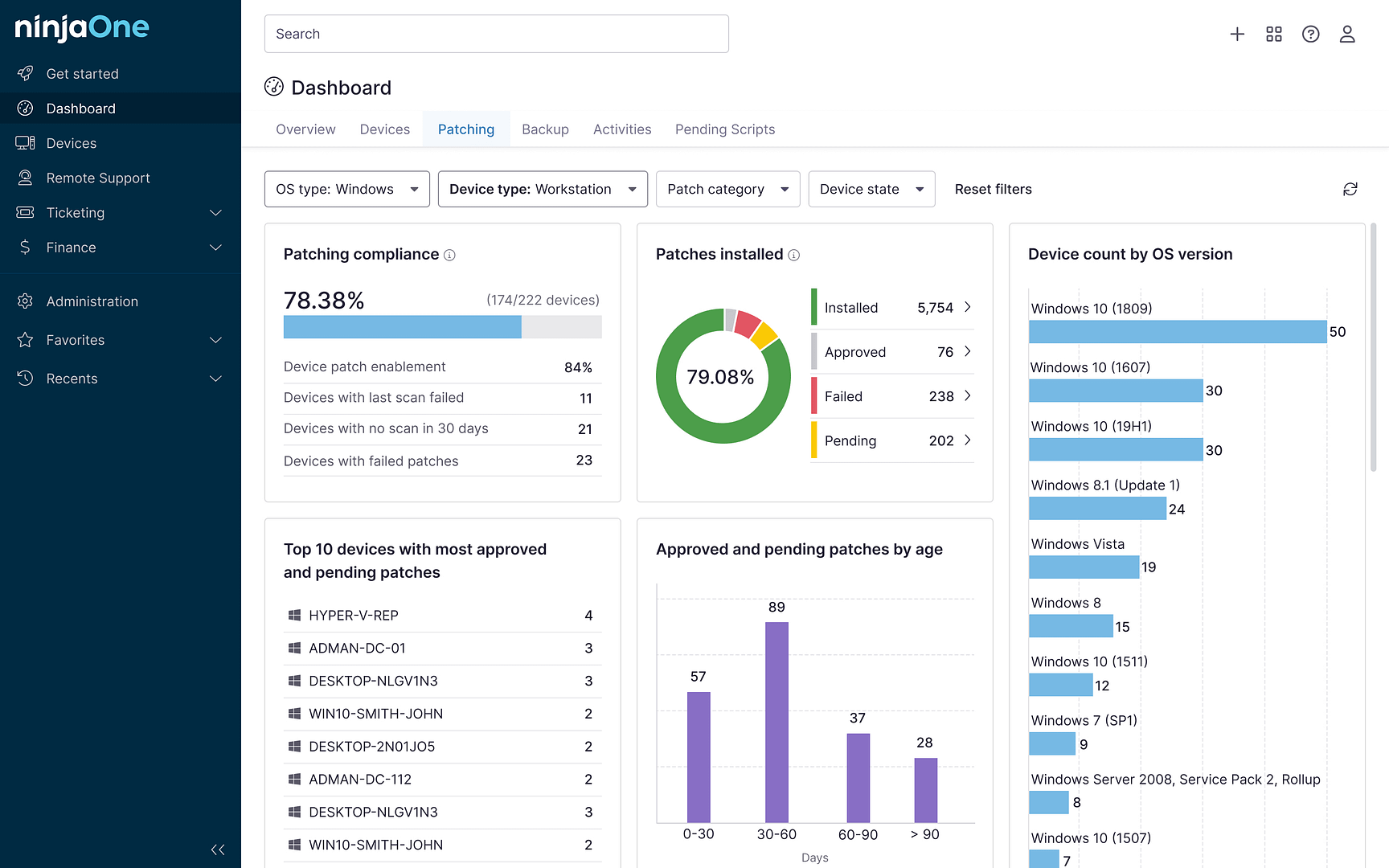
- Automated Patch Management: By automating patch deployment, NinjaOne ensures systems are up-to-date with the latest security fixes and software updates. This reduces the risk of vulnerabilities that could lead to downtime due to exploits or unpatched issues.
- Remote Access and Support: NinjaOne’s remote access capabilities enable technicians to quickly address issues without needing to be physically present. This reduces resolution times and prevents minor problems from escalating into full-blown outages.
- Comprehensive Reporting: The platform provides detailed reporting on system health, performance metrics, and incident history. This data can be used to demonstrate the value of IT investments by showing how downtime has been reduced and efficiency improved.
- Integration with Other Tools: NinjaOne integrates with various IT management tools, allowing for a holistic approach to outage prevention. By connecting with asset management, help desk, and other systems, NinjaOne helps create a unified strategy for minimizing downtime.
Make Every IT Dollar Count
Cut waste, boost efficiency, and take control of your entire IT environment with NinjaOne’s IT management platform. From asset tracking to cost-saving insights, our all-in-one platform helps you do more with less—without sacrificing performance.
Start your free trial or watch a demo and see the difference.