Key Points
- MSP ticket handling breaks down over time due to process drift, outdated ITSM best practices, poor exception management, and workflows that fail to adapt to changing client needs.
- MSPs must focus on overall workflow health, accurate reporting, proactive reviews, clear ownership, and continuous documentation.
- Integrated and automated MSP platforms like NinjaOne unify help desk ticketing, RMM, MDM, documentation, and remote access, improving ticket resolution speed.
Managed service provider (MSP) ticket handling sits at the core of client satisfaction and business success. MSPs and internal tech teams invest significant effort in the planning, tool selection, and implementation of ticket handling, however these efforts often come undone over time. Creating scalable ticket handling processes that are resistant to process drift while being adaptable to evolving user requirements is a significant ongoing challenge for IT service providers.
This guide outlines how and why MSP ticket handling best practices lose effectiveness, the impact this has on helpdesk performance, and how ticket handling consistency can be maintained with practical measures.
The importance of ticket handling for MSPs
IT ticket handling is critical to the success of your MSP. Handling support requests from multiple clients requires coordination, especially during peak periods when there may be high volumes of tickets from multiple customers. Tech support isn’t solely about technical outcomes, and ticket handling isn’t just a software feature: it’s a process that impacts end-users and enables your clients’ businesses to remain operational, secure, and profitable.
Blind spots, delays, and ticket backlogs lead to user dissatisfaction, which harms the reputation of your MSP, and eventually leads to the loss of your own business opportunities.
IT ticket handling best practices in summary
IT ticket handling best practices are constantly evolving, but generally cover the following aspects of IT service management (ITSM):
- Categorize and tag tickets: Encourage users to keep tickets focused on a single issue (even if it means submitting multiple tickets), so that they can be categorized and processed efficiently.
- Triage and prioritize issues: Establish support tiers and triage tickets, and ensure high-priority tickets are addressed first and that specialist engineers’ time is not wasted on general issues.
- Enable end-user self-service: Provide documentation that end-users can access to solve their own problems, reducing ticket load.
- Use templates and automation: Templates speed up response time and help resolve common requests faster, while automation makes ticket handling workflows more efficient.
- Stage and schedule major projects: Avoid overlapping major projects, and avoid scheduling them during times when ticket volumes peak.
While most useful during planning and initial implementation, these best practices can lose effectiveness as requirements change, or they simply become increasingly ignored over time. This doesn’t mean they should be ignored after implementation: ticket handling best practices should be acknowledged during periodic review of workflows to ensure none of the “basics” have been overlooked, fallen out of use, or become more relevant due to changes to the environment.
Why ticket handling processes degrade over time
Ticket handling workflows that are not revisited or refreshed after being established can quickly degrade.
While technicians and end users gradually drifting away from un-enforced processes can cause performance degradation, rigid assumptions made during the initial planning and failure to adapt to discrepancies in real world usage are just as damaging. Technician load can be artificially increased if processes do not adapt to the situation on the ground, rewarding shortcuts and quick fixes that silently incur technical debt.
Improper exception management also introduces pitfalls for technicians, with inconsistent endpoint configurations leading to unexpected additional work to resolve issues.
The limits of just following best practice lists
The best practices lists you find online are designed to be broadly applicable, and make many assumptions. What works best for your organization and clients, however, may not align with these.
Client industries, specific technology use cases, end-user preferences, and technician specialties all impact whether a best practice is appropriate. Some best practices may need to be tweaked or discarded once it is clear that it is not reinforcing your team’s strengths. This should be documented, with the justification, so that you can evolve your own best practices and learn from mistakes, enhancing the onboarding process for future clients.
Best practices lists are also rigid and limiting when blindly followed. In real MSP environments, variability increases over time, making static rules less effective.
Focusing on overall workflow health vs. individual best practice compliance
A holistic approach to help desk workflows create the best results. The individual components of common IT best practices should not be enacted in isolation, and should support a larger process with clear goals.
For example, templates and automation do not replace thoughtfully designed workflows – they execute them. Similarly, when a technician fails to resolve an issue or an ongoing problem goes unidentified, it usually isn’t for a lack of discipline in following guidelines, but due to unclear ownership, conflicting priorities, or flaws in the process itself.
Impact on reporting and decision-making
The data collected from compromised ticket workflows itself may be unreliable, so identifying the cause of ticket handling breakdowns cannot rely only on monitoring KPIs. You must regularly consult with technicians and end users to find out how processes can be improved and confirm the story told by the numbers.
Proving the value of your MSP relies on both accurate data and real-world feedback. SLA compliance can quickly slip when poor ticket handling meets an unexpected surge in volume. This may not be foreseeable if trend analysis is inaccurate due to incomplete information.
Signals that your ticket workflows need review
You should review ticket handling processes when:
- Exceptions become informal and outnumber standard documented procedures
- Reports require manual correction to avoid compromising the decision-making process
- Escalations become ad-hoc and unexpected
- Documentation quality is inconsistent
These signals indicate process drift, helping identify issues before a failure scenario occurs.
Moving from reactive fixes to proactive ticket workflow evaluation
The viability and long-term sustainability of your support ticket workflows is predicated on proactively identifying problems before they cause a backlog or become entrenched, and ensuring adaptability is part of the process architecture.
This means regular workflow reviews, and clear ownership of the lifecycle stages. Your documented processes and actual workloads should evolve together with regular revisions and staff training, rather than drifting apart.
Combating ticket handling inefficiencies with documentation
If your ticket handling process becomes entirely reactive, and you find yourself just putting out fires and never fully resolving structural issues, you may need to rebuild from the ground up. Make your support process user-friendly, natural, and intuitive, and implement thorough documentation using a platform that allows you to publish playbooks and technical documents for your team, as well as self-service documentation for end-users to reduce ticket volume.
Unifying help desk ticketing, documentation, and automation with NinjaOne
Automation and integration are force multipliers for MSPs and internal IT support teams with a scaling user base. Automation takes optimized workflows and makes them faster and more efficient, giving you more time to understand your clients business needs, and users’ unique workflows, tools, and preferences. Meanwhile, integration plays a critical role in eliminating gaps from your ticket handling process. Choosing the right tools to form the foundation of your MSPs workflows underpins its long-term success.
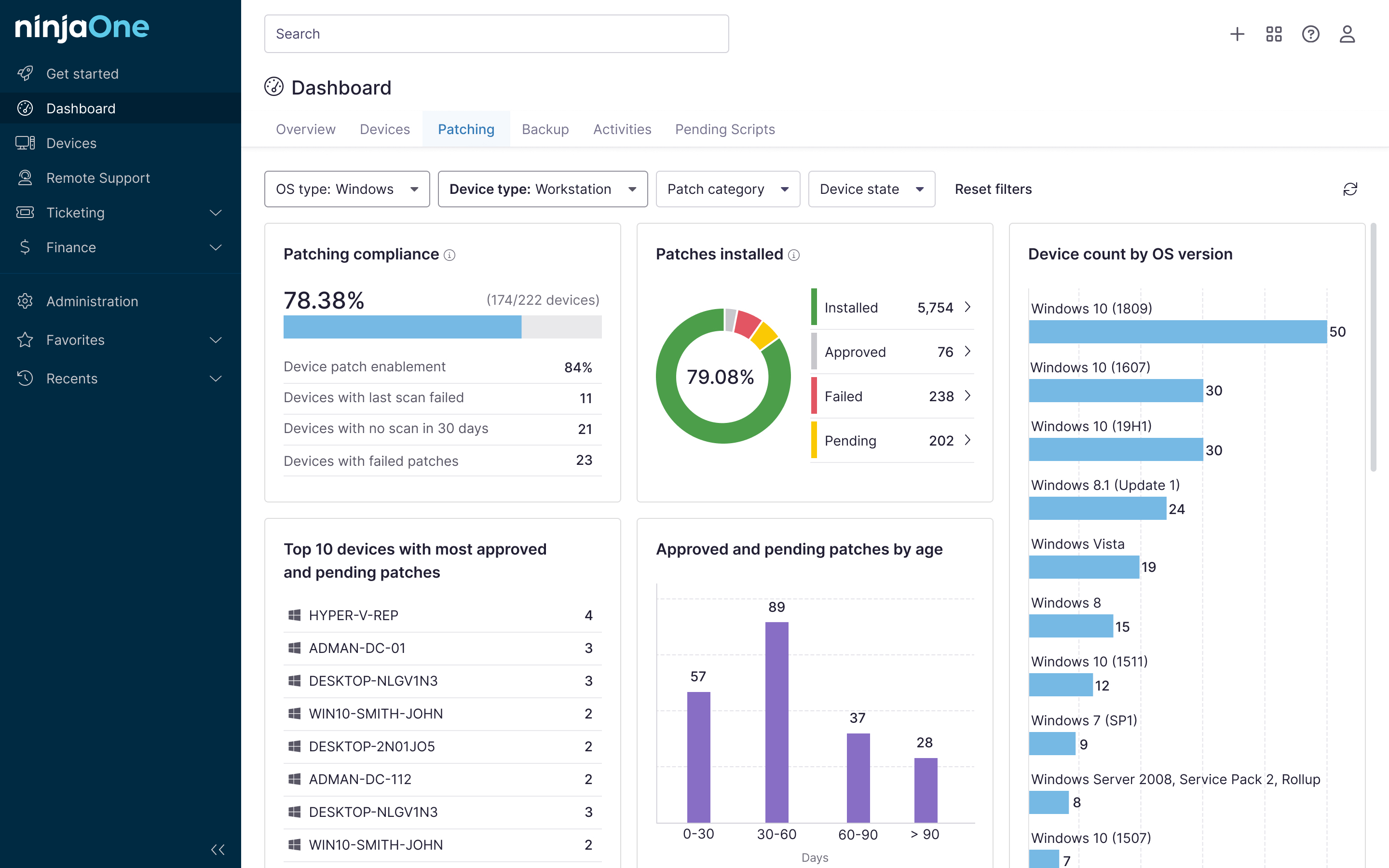
NinjaOne provides a comprehensive and extensible MSP platform that unifies helpdesk with remote access mobile device management (MDM) and remote monitoring and management (RMM), network monitoring, backup, and documentation. NinjaOne integrates directly with popular endpoint protection solutions, as well as a growing number of third-party services.
Using an automated and integrated MSP toolchain like NinjaOne allows you to make ticket workflows work consistently, even during surges. With features like allowing you to remotely access end-user devices with a single click when viewing a ticket, and self-service documentation for end-users, tickets can be solved faster, demonstrating competence and freeing resources for ongoing infrastructure projects.